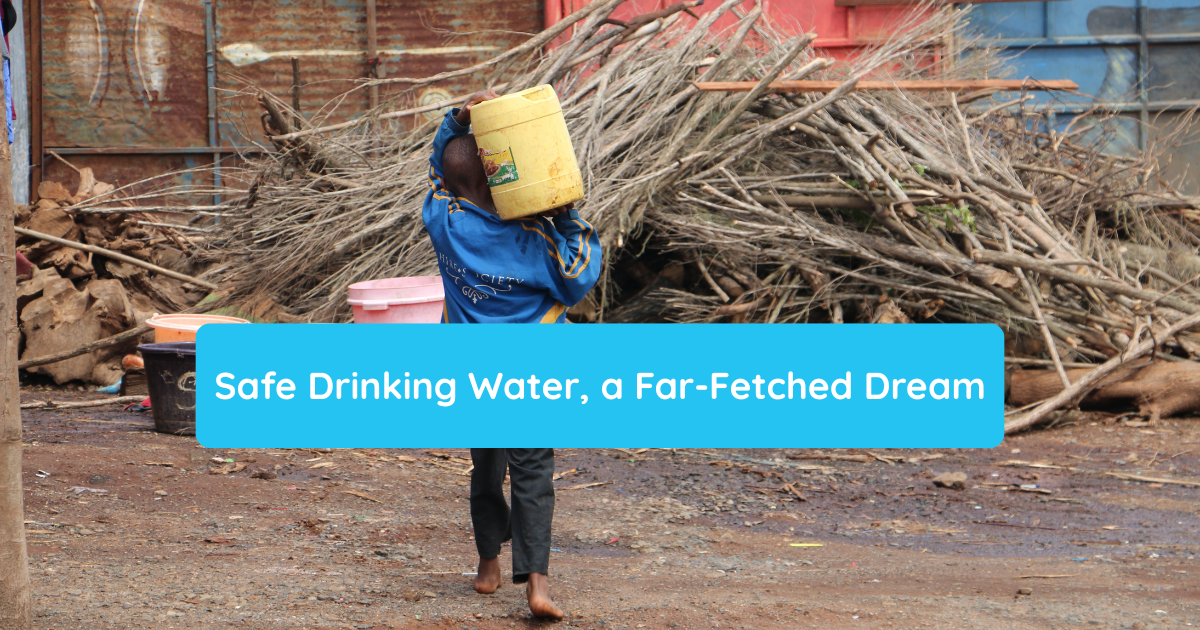

In most parts of Kenya, clean running water is a rare commodity rather than a basic need. In a country with roughly 64 lakes and several major rivers, most inhabitants still struggle to access water. People walk long distances in search of water, and school-going children have to carry gallons of water back home on their way from school to help their parents. This precious commodity has to be stored carefully in jerrycans and used sparingly to last a long while.' Water is life, yet many families in Kenya are affected by consuming contaminated water
More often than not, it starts as a subtle stomach discomfort. Parents and guardians have to figure out what the child could have eaten at school or on their way home. They observe that what could have started as stomach discomfort quickly escalates to fever, vomiting and unending diarrhoea. It's at the point of this “small illness” getting more and more serious that a clinic visit follows. A hospital visit becomes necessary, and prescription and hospital bills must then be paid. Finances that would have been directed to school fees, school supplies or even food have to be redirected to treatment. This sets the families back by a wide range, given that most families already live in poverty. With a good percentage living on under a dollar a day.
Unfortunately, this cycle of illness doesn't stop at one child; other children in the same vicinity who have been exposed to contaminated water soon follow. This is how waterborne illness affects a community. Giving almost similar symptoms to any other common disease, like Malaria, leading to misdiagnosis and, in many cases, premature death. In Kenya, many homes rely on untreated water from rainfall, rivers, lakes, boreholes, and even water bowsers, all of questionable quality. Most people only consider water dirty if it's brown. Unfortunately, even clear water often carries bacteria, viruses, and disease-causing pathogens responsible for illnesses such as typhoid, dysentery, and cholera.
According to the National Health data, diarrhoeal illnesses remain among the leading causes of illness among children under the age of five in Kenya. UNICEF in its report states that unsafe drinking water, poor drainage and sanitation and poor hygiene practices contribute to preventable childhood sicknesses and death.
Why are children the most affected?
Children under the age of five are most affected because their immune systems are still developing. Repeated exposure to contaminated water weakens their bodies and makes them more vulnerable to other infections. Further to this, there is an increase in missed school days for the children and missed work days for the parents and caregivers.
Maji Zima's Response to the Issue
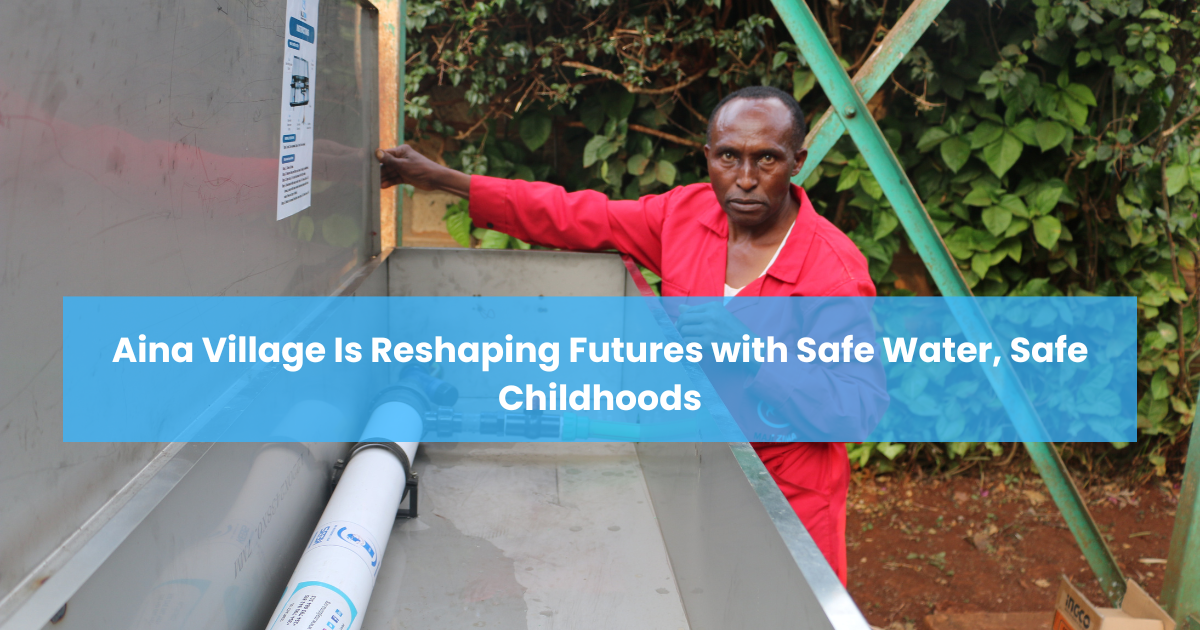
One of the Maji Zima beneficiaries, Young Life Rescue Centre in Ruiru, caregivers live this reality daily. The home uses water from a well dug within the compound. Unfortunately, when the area receives heavy rain, the river overflows into the well, contaminating the water and causing most of the kids to fall sick. Although the home caregivers were hands-on, it was difficult to prevent this recurring pattern of hospitalisations. They tried boiled water for the younger children and water treatment solutions for the older kids. It seemed to work for a while; however, they needed something that wouldn't change the taste of the water or exponentially increase the price of gas or electricity from repeated boiling of water.
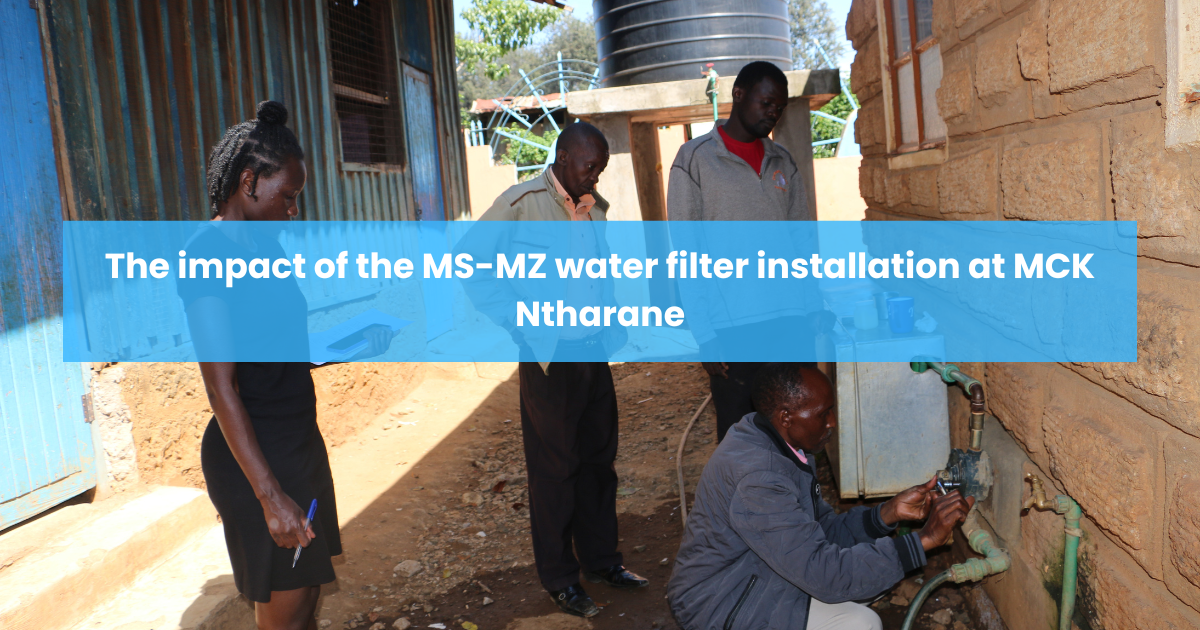
During our pre-installation survey, the manager, Fred, said, “ Every stomach ache felt like the beginning of another hospital visit.” When Maji Zima installed an MS-MZ water filter system, they received it with gratitude and a renewed hope. A few weeks later, the home was hit by a flood and a nearby sewage burst contaminated the waters, but luckily, they had a filter! The number of casualties was significantly reduced by 95%. The water was no longer unsafe. We had helped them reduce the clinic visits caused by consuming unsafe water.
How does water get contaminated?
Water contamination in urban areas mostly occurs due to poor sanitation. Most Towns are poorly planned, so sewage drainage can easily find its way into the clean-water reservoirs. Secondly, contamination can occur through runoff carrying waste products into water sources, poorly maintained water tanks, and other sources. Unfortunately, even when water is harvested safely, contamination can still occur during transportation or even storage.
Therefore, access alone is not enough. People must find effective ways to treat water, protect water reservoirs, and store water safely. Waterborne diseases are preventable. As a country, we need to adopt simple, sustainable interventions such as water filtration systems and safe storage solutions, like cleaning out the tanks after every few weeks. Further to this, we cannot ignore the role of educating people on hygiene, which will also help drastically reduce disease risk. With the right tools and knowledge, families in Kenya and even around the world will experience decreased hospital visits due to waterborne illnesses, reduced expenses and happy, healthy children.
Maji Zima believes safe drinking water is more than a basic need. It's protection for young lives, relief for parents and guardians, and restoration of hope. You too can be part of the solution. By staying at Maji Zima Resort, you can be an indirect donor, as all proceeds from your stay go towards providing safe drinking water to underserved communities. You can also give directly through our Mchanga platform or to our account. Supporting safe drinking water initiatives means investing in health, education and dignity all at once. Let's come together to ensure that water remains a source of life, not illness. Let's give caregivers peace of mind and communities the foundation to thrive.